US–Iran Negotiations in Pakistan: A Strategic Breakdown with Hidden Implications
Keywords:
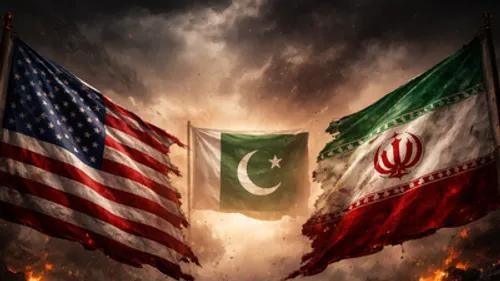
The recent U.S.–Iran negotiations held in Islamabad, Pakistan (April 2026) mark one of the most significant diplomatic engagements between the two nations in decades. Despite 21 hours of intense talks, no agreement was reached, leaving the fragile ceasefire hanging by a thread and pushing the region closer to renewed escalation.
But beyond the headlines—“talks failed,” “no breakthrough,” “tensions rise”—there is a deeper geopolitical layer that most coverage is missing.
What Actually Happened in Islamabad
The talks, mediated by Pakistan, aimed to:
- End the ongoing Iran–U.S. conflict
- Reopen the Strait of Hormuz, critical for global oil supply
- Address Iran’s nuclear program
However, the negotiations collapsed due to irreconcilable red lines:
- The U.S. demanded complete halt of uranium enrichment and dismantling of nuclear infrastructure
- Iran refused, framing it as a matter of sovereignty and regime legitimacy
Additionally:
- Iran insisted on maintaining leverage over Hormuz
- The U.S. demanded unrestricted global access to the strait
- Deep mistrust—fueled by prior military strikes—undermined any compromise
The result: stalemate, not diplomacy.
Immediate Aftermath: From Diplomacy to Economic Warfare
Within hours of the talks failing, the United States escalated dramatically by announcing a naval blockade on Iranian ports.
This signals a shift from:
Negotiation → Economic containment → Potential military escalation
The blockade:
- Targets Iran’s oil exports
- Disrupts global shipping routes
- Raises risks of confrontation in the Persian Gulf
This is not just a failed negotiation—it’s a transition into a new phase of conflict.
The Overlooked Angle: Pakistan Was Not Neutral
Most coverage portrays Pakistan as a “mediator,” but that’s only partially true.
Pakistan played a strategic balancing act:
- Maintained ties with the U.S.
- Avoided alienating Iran
- Simultaneously reassured Gulf allies and managed Israeli concerns
Critically, Pakistan reportedly:
- Extracted U.S. assurances to restrain Israel before talks began
This is the hidden leverage point:
Pakistan wasn’t just hosting talks—it was actively shaping the preconditions of war and peace.
The Israel Factor: The Silent Driver of the Negotiations
Most mainstream reporting treats Israel as background noise—but in reality, it is central.
1. The War Itself Is Not Just U.S.–Iran
The ongoing conflict involves:
- Direct and indirect Israeli military actions
- Iranian responses in Lebanon and the region
2. Israel Opposed the Ceasefire
Before talks:
- Israel favored continued military pressure on Iran
- It only stepped back under U.S. pressure
3. Iran’s Core Fear Isn’t the U.S.—It’s Regime Survival Against Israel
Iran’s refusal to concede on nuclear issues is tied to:
- Deterrence against Israel
- Regional power projection
This leads to a critical insight:
The talks failed not because of nuclear disagreement—but because Iran sees nuclear capability as protection against Israel, not the U.S.
The Real Uncovered Insight: This Was Never Meant to Succeed
Here’s the critical perspective most outlets missed:
The talks functioned as a strategic checkpoint, not a peace effort.
Evidence:
- The U.S. presented what it called a “final offer”—a classic pressure tactic
- Iran entered talks knowing it would not abandon enrichment
- The U.S. moved to blockade immediately after failure
This suggests:
The negotiations were designed to legitimize escalation, not prevent it.
In other words:
- Diplomacy created a moral and political justification
- Failure enabled the U.S. to shift to economic warfare with global backing
Global Consequences
The collapse of the Islamabad talks has already triggered:
1. Energy Market Shock
- Hormuz tensions threaten global oil supply chains
- Rising fuel prices expected worldwide
2. Regional Instability
- Lebanon, Gulf states, and shipping routes at risk
- Proxy conflicts likely to intensify
3. Diplomatic Fragmentation
- Allies urging restraint (e.g., Australia)
- But no unified global strategy emerging
Final Analysis
The Islamabad negotiations were historic—but not hopeful.
They revealed:
- Deep structural mistrust between Iran and the U.S.
- Pakistan’s emerging role as a power broker, not just mediator
- Israel’s indirect but decisive influence on outcomes
Most importantly, they exposed a harsh geopolitical reality:
This conflict is no longer about nuclear weapons—it’s about regional dominance, deterrence, and the reshaping of Middle Eastern power structures.
And unless that core issue is addressed, no amount of diplomacy—whether in Pakistan or elsewhere—will succeed.